24 January 2014

Making Book: The Mythical One-Man Band

(With apologies to Teresa Nielsen Hayden)

Just in case it wasn't clear before: THURSDAY'S CHILDREN is self-published. Yes, I said self-published. I know some writers prefer the term "indie author," but I don't feel the need for that bit of dress-up. Let's call a spade a spade. This one book will not bring me any sort of fame or fortune. Nobody in the history of the world has ever gotten rich off a frickin' short story collection.

The main reason I'm publishing at all is to commemorate a personal milestone, and to share it with my family and friends. I've written more than two hundred and fifty stories, y'all. That's a hell of a thing. I want to celebrate it, and you're invited to join me. That's all.

So I'm self-publishing this book for fun. I am doing the work mostly by myself, but I'm not doing it alone. What's the difference? I'm not alone, because I couldn't do any of this without the infrastructure and systems that others have already built.

It's like Senator Elizabeth Warren (D-MA) says:


There is an entire Internet of resources that I've taken advantage of, and which have been absolutely necessary for this project. I don't begrudge any of those other individuals and organizations the money I've paid for their tools or the time I've spent learning how to use them.

Here's a short list of just some of the software, sites, and services I've used in the creation of this book: Scrivener, Microsoft Word, GIMP, Emacs, Lulu, Createspace, Amazon, BookBaby, Blogger, Gmail, Chrome, Flickr, and PayPal.

(By the way, that list doesn't include all the standards—file formats, network protocols, and more—that make it possible for me to turn my raw data into something humans will want to look at. For example: HTML/XHTML, CSS, JPEG, PNG, TIFF, PDF, DOC/DOCX, MOBI, EPUB, and ZIP, to name just a few.)

And then there are the people, actual human beings, who helped me with the production process: DeeAnn Sole, my redoubtable editor; Laura Mixon, who wrote a fantastic introduction; and Natalie Metzger, who created the amazing cover art and interior illustrations. Plus there are all the 512 readers who gave feedback over the last five years, and my fellow writers who offered invaluable publishing advice. (You'll find a more complete list in the Acknowledgements section at the back of the book.)

I could have made the book without these people, but it would have been a much inferior thing.

Nobody creates in a vacuum. If nothing else, any artist needs an audience for her work; sometimes it's an audience of one, but in most cases, we want a plurality to see and enjoy our work. At the very least, it's asking yourself: "Will anybody else care about this?" And in a world of seven billion people, the answer is probably YES. Then it's a matter of crafting your work so that it's meaningful and appealing, to whatever degree satisfies your sensibilities, commercial or otherwise.

It's okay to make art for art's sake, and not expect to reap a dime of financial reward. I mean, hell, I spend who knows how many hours making at least a dozen free puzzling events every year, and even spend my own hard-earned money (and precious time) to subsidize their creation. I do this because I want to share those fun things with other like-minded people. If I get something tangible in return, great. I'm not expecting it. That's not why I do the work.

All that is to say that I don't expect to break even on self-publishing THURSDAY'S CHILDREN. (You know the old joke: How do you make a small fortune in publishing? Well, you start with a large fortune...) I don't expect to sell more than a hundred copies of the book—if that many—and that's just fine. I'm doing this for love, not money. And we will do things for love that we would not do for any amount of money.

EOF

18 January 2014

Making Book: Inspirations and Introductions

(With apologies to Teresa Nielsen Hayden)

Before I get into this week's behind-the-scenes stuff, a quick announcement:

Thursday's Children, the 512 book, is officially launching on Friday, January 31, 2014 (less than two weeks from today), in eBook and trade paperback. Mark your calendars!

Now, let me tell you about the notable science fiction author who wrote the introduction for Thursday's Children. (TL;DR: it's Laura J. Mixon, and she's awesome.)

As you know, Bob, I attended the Viable Paradise (VP) science fiction and fantasy writers' workshop in 2008. See how excited I was when I got the news of my acceptance? I was not disappointed by the experience. A bit overwhelmed, perhaps; VP packs a lot of stuff into a single week. And Thursday night... well, we don't talk about Thursday night.

I met a lot of great people at VPXII. My classmates included the amazing Claire Humphrey, munchkin wrangler Marko Kloos, "the other Asian guy" Anthony Ha, and more.

And then there were the instructors: the distinguished Nielsen Haydens, Uncle Jim & Doctor Doyle, Scalzi, Bear, Steven Gould, and Laura Mixon.

Every one of these people had something important to teach me, and even if I'm still figuring out how to apply many of those lessons, the time I spent on the island was invaluable.

In particular, Laura Mixon offered a refreshing, analytical perspective on writing, which resonated with me—we're both engineers by training, and I love it when there's actual data behind a presentation. (Laura even has research to back up her use of the gender-neutral pseudonym "M. J. Locke." PREACH.) At VPXII, she lectured about a cognitive model of the writing process. "There's a study," she said more than once, before explaining the science of it.

The example I remember best involved two creative writing classes: one was told their work had to be perfect; the other was graded by word count. The result? The second class actually produced, instead of agonizing over whether they could produce for each assignment—and their final work was of comparable quality to the first class' output, plus there was much more of it. More practice was better. Quantity trumps quality.

For a time when I was younger, I hated the word "practice," because it meant sitting in front of the piano and playing the same piece or passage over and over again, with very little variation, until I got it right or made some measurable improvement in technique. It was tedious, and as a child, there were a million other more interesting things I wanted to do.

It takes great discipline to have a long-term goal in mind, and to work tirelessly toward that goal. It helps if you enjoy what you're doing along the way, because plans changes, and you may end up in a totally different place than you originally targeted. And here's the thing: you don't need to be good at something in order to enjoy it.

As Laura explained at VP, there are four stages of learning a new skill:
  1. unconscious incompetence - you have no idea what you're doing, and you're not very good at it
  2. conscious incompetence - you're trying real hard, but you still suck
  3. unconscious competence - you're getting better, but you don't really understand how or why
  4. conscious competence - you know exactly what you're doing, and you're good at it
It's important to note that reaching that fourth stage is not the endgame. You may be good, but you're not great. At this point, the ten-thousand-hours rule applies—especially in "cognitively demanding" fields like playing the piano, where competence is a long way from mastery. Writers often talk about the million words of crap (give or take) which you need to get out of your system before you're producing stuff of publishable quality. And even at that point, it's still a buyer's market. It's good to be good, but it's better to be lucky.

Does any of that discourage me? No. Because I love what I'm doing. I spent 4.9 years writing (or at least editing) a new piece of 512 flash fiction every week. That amounts to a grand total of roughly 130,000 words, and maybe 1,000 hours of practice. During that same time period, I also spent a lot of time writing other stuff—short stories, novels, non-fiction, puzzles, and more—but 512 Words or Fewer was the one thing that demanded regular, deliberate effort, and I am confident it has done more than any other single project to improve my skills as a writer.

None of that would have happened without VPXII and Laura Mixon, and I'm elated that she agreed to write a brief introduction for Thursday's Children. Her intro is the source of the blurb at the top of the 512 book web page, and you should also go read her most recent novel, because it's damn good.

EOF

10 January 2014

Making Book: 1,024 Words or More

(With apologies to Teresa Nielsen Hayden)

Remember that surprise puzzle hunt my friends organized for my birthday last year? (Yeah, no, I'm never going to stop talking about it. Because awesome.) Well, that same weekend, our friend Natalie sent me this "Cowboys and Aliens" fan art as an early birthday gift:


That was also completely unexpected and wonderful. And it got me to thinking, since DeeAnn and I had already decided to publish a collection of 512 stories: we're going to need a cover. Why not hire Natalie to draw it?

(The image above is also what I used for the "not very good" cover mock-up mentioned last week.)

I'm not precisely sure when I first met Natalie—it was probably during one of the JoCo cruises or at some kind of Doubleclicks-related event in the Portland area, where we both live. But I knew she was quite an accomplished artist—she was one of five finalists in Scalzi's Redshirts fan art contest—and her illustrations had a cartoony, whimsical style that I liked a lot.

So, back in November, I asked her how she was at drawing vehicles. She said she could handle spaceships and dirigibles and probably more. And away we went.

We met just once in person to discuss concepts, and everything else happened by e-mail. Her first set of sketches included two designs with elements that clicked right away, including the astronaut-not-loving-her-EVA:


I had already thrown out the idea of using interior illustrations to break up the 117 stories into thematic sections—one character per theme—and asked if she could find some way to incorporate those same characters into the front cover. I sent her some feedback on those initial sketches, and she came up with this:


That's pretty much the final layout, as you'll see below, with one character showing through each of those portholes. I was impressed with how quickly she dialed it in, and well how the rest of it all came together.

For reference, here are her finished pencils and inks:


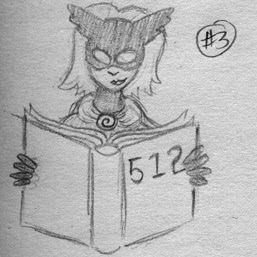
We also went through another, somewhat parallel process to figure out the six theme characters. That also went very quickly, except for making sure that a small picture of a female superhero would read correctly and with the right amount of gravitas.

Here are some "super-lady" designs that didn't quite hit the target, for various reasons which I could only articulate after seeing them:


Once we got the characters nailed down, it was just a matter of picking which three should appear in the portholes. We also went back and forth on fonts and engine colors for a bit, but I'll spare you those details and just show you the final cover art:


Long story short: I love it. It's far better than anything I could have imagined or produced on my own, and I think it conveys the perfect tone for this collection.

I look forward to working with Natalie again, and next time, I'll do my best to give her some more monsters to draw. :)

EOF

03 January 2014

Making Book: By Any Other Name

(With apologies to Teresa Nielsen Hayden)

I'm terrible at coming up with story titles. If you've read more than a couple of 512s, you already know this; my typical go-tos are song titles (e.g., "Don't Fence Me In") or the titles of SF/F novels (e.g., "Stranger in a Strange Land"). Because you can't copyright a title, and I'm lazy. I also like re-using existing phrases, because I can then exploit that emotional resonance. Or just turn it into an awful pun. Both are good.

For this book, however, I wanted something that was at least a little more evocative and meaningful. I'm not a big fan of one-word titles, which can seem very generic, but I also didn't want something too long, since I planned to add some kind of explanatory subtitle to describe the content (i.e., to make it clear that this was a short fiction collection).

Because I am so very lazy, I procrastinated on this until DeeAnn and I started working with our friend and awesome artist Natalie Metzger on the cover and interior illustrations. I'll talk more about that process next week, but she was invaluable in helping me nail down the title and also figure out exactly what images should go on the cover.

Long story short, the relevant portion of our e-mail conversation went roughly like this:

Natalie: Have you come up with a title yet?

Me: ...

(three days pass)

Me: How about SUCCESSFUL EXPERIMENTS? Or WRITTEN ON THURSDAY? And here's a mock-up which is not very good. :)

(image attachment sent)

DeeAnn: I like WRITTEN ON THURSDAYS. And I agree, that mock-up is not good. ;)

(the next day)

Natalie: How about THURSDAY STORIES? I like how the day sounds in the title.

Me: I've got it... THURSDAY'S CHILDREN!

(End of scene.)

So there you are: the title of the book will be Thursday's Children: Flash Fiction from 512 Words or Fewer. It's not strictly a "best of" collection, as I explained last week, but it does include many of the most interesting and successful results of my often late-night weekly writing sessions--which usually happened on Thursdays. And some of them have grown up to become longer works, but many others are still developing.

In case you're curious about the mock-up image which I sent as part of the e-mail thread cited above: That's directly related to Natalie's artwork, and I'll show you how next week.

EOF

27 December 2013

Making Book: Selection Criteria

(With apologies to Teresa Nielsen Hayden)

The 512 collection DeeAnn and I are publishing next month will include one hundred and seventeen stories out of the two hundred and fifty-six from my weekly blog. Why aren't we including all the stories? The main reasons are:
  1. Some have been or will be published elsewhere.
  2. Some are in the process of becoming longer finished works (e.g., novels).
  3. Some of them just weren't very good.
So given all that, how did we pick the stories to include? First, we each rated all the stories independently.


In hindsight, we should have synced up on our rating methods beforehand, because I only used integers (0==no, 1==maybe, 2==yes) and DeeAnn used rational numbers between 0 and 2, inclusive. But we averaged the scores anyway, and discussed any wildly divergent scores or right-in-the-middle ratings.

After we agreed on the set of stories to include, we had to decide on an order in which to present them. To that end, DeeAnn created a new spreadsheet where she summarized each 512 in a logline, and also noted the general theme of each piece and whether it was a strong candidate for an opener or a closer.


Out of all that data, she distilled the themes down to six major sections. Then I took a stab at sorting the sections and stories. (Note my clever use of an old BASIC line numbering trick--i.e., using increasing but non-consecutive numbers to allow later additions--which would have much more useful if I had started doing it before I was halfway through the spreadsheet.)


At that point, we knew exactly what content would be in the book, even if we weren't yet sure about the final order. I spent a few days copying the text of all 117 stories into a Scrivener project, using that latest spreadsheet as a guide, and now we can make whatever tweaks we need to while looking at the actual, mostly formatted text.

So now we have a book, more or less. Yay! What are we going to call it? I'll talk about that next week.

EOF

20 December 2013

Making Book: Teaser

(With apologies to Teresa Nielsen Hayden)

I don't think I ever made a formal announcement about this, so here it is: a collection of stories from 512 Words or Fewer will be available next month, as a print-on-demand trade paperback or e-book edition. I'm aiming for an official release on Friday, January 31st (which happens to coincide with the Lunar New Year).

Note that this is not a "best of" collection. Certainly some of the best 512s are included, but I've turned other great pieces into longer stories for submission to paying markets. For example, I recently sold "Somebody's Daughter," a Jake and Andy novelette (13,400 words) which started with "Who's Your Daddy?". The expanded story will be in the next issue (#65) of Leading Edge Magazine, and you should all go buy that when it comes out. :)

Anyway, I'm going to post every Friday from now until the 512 book launches with some background info on its creation. DeeAnn helped me select the stories, I love the title we came up with, and there's going to be spectacular cover and interior artwork by our friend Natalie. Stay tuned for details on all that and more!

EOF

27 September 2013

Free to Good Home

Did you know that my short story "Don't Fence Me In" is featured in the Song Stories: Blaze of Glory anthology? And did you further know that said anthology is a FREE Kindle download this weekend (through Monday, September 30th, 2013)?


And if you simply must have a physical artifact, you may purchase a trade paperback edition of Song Stories: Blaze of Glory for the paltry sum of eight dollars and ninety-nine cents (plus tax and shipping, if applicable). Your book will be made to order, or "printed on demand," if you will. What marvels this brave new century hath delivered!


P.S. Tuesday is my 40th birthday, and I'd like your help with an unrelated project: would you kindly tell me how we met? (If you've already responded, feel free to encourage someone else to do it. I'd love to hear from one hundred people before Tuesday, and we're so close!)


P.P.S. Yeah, yeah, I know. "That's what she said."


EOF

09 September 2013

Go West, Young 512

Hey, remember "Don't Fence Me?" Well, it took a while, but I turned that 512 into a longer version (3,600 words) and submitted it to various markets. After fifteen rejections, it found a home in the anthology Song Stories: Blaze of Glory--which is now available in trade paperback and on Kindle!


The anthology also includes a story from fellow Pacific Northwest writer Camille Griep, who organizes the annual Cascade Writers workshop!

Every story in this collection is a "weird Western" inspired by a particular piece of music, which each author describes in an afterword. I couldn't include a music video with my afterword, but here's my song:


https://vimeo.com/11355379

I built the longer story around the same emotional core as the original 512, but added a lot of depth, if I do say so myself. There's more of all the main characters, an extended ending, and a new opening scene. Here's the first line:

The first time I met Horace Granger, he almost got killed by a magic bullet.

Want to read the whole thing, and six other song stories?

Buy Blaze of Glory in paperback ($9)

Buy Blaze of Glory on Kindle ($3)

EOF